A slow day in Manitoba history so I thought I would take the time to do a bit of housekeeping !
- A couple of weeks back I tried a new template for the blog. I like it and I hope that you do, too. If there's anything you don't like please let me know !
- I have cleaned up the links area and added a number of new history essays. My expanded posts end up at Winnipeg Downtown Places or my main West End Dumplings. I try to keep this blog strictly ' history by the day'. I have added blog headlines for my other blogs on the top left so you can see if there is a new history related post and I will try to be more diligent in cross linking them here.
- Another addition is an Amazon e-Store of Manitoba history books.
After Christmas I noticed that a lot of titles that don't often get discounted such as the numerous Gourluck volumes were on sale at nearly 40% off (and still are).
I thought that I would create the e-Store to catalogue of what is available in print (a Chapters and McNally version are coming soon as the titles carried vary by store). Hopefully the link is of use to buyers or to help find a book at your local library as they should carry all of those titles.
I get a minute per-centage of any of the e-Store stuff sold so if you are thinking of ordering, please do it via my links and help out a starving history buff !
I also continue to update my "Manitoba History Gift Ideas" post with great items and organizations that deserve your support.
Christian


Manitoba History e-store at Amazon.ca
For a couple of years now I have kept a running list of Manitoba history gift ideas that I update before Christmas.
Many of the book tiles are available at Amazon.ca so I thought that I would start an Amazon e-store of Manitoba history related titles. (There's a widget to the left).
The 'store' includes available titles, bookmarks for some out-of-print titles that will hopefully return one day. I've also made a category for classic Manitoba tunes and fiction and one for children's related stuff.
If you get a chance, check it out.
I will continue to update my history gift ideas post, and I link to it off of the e-store page. If there's anything you'd like to see added, just let me know !
Many of the book tiles are available at Amazon.ca so I thought that I would start an Amazon e-store of Manitoba history related titles. (There's a widget to the left).
The 'store' includes available titles, bookmarks for some out-of-print titles that will hopefully return one day. I've also made a category for classic Manitoba tunes and fiction and one for children's related stuff.
If you get a chance, check it out.
I will continue to update my history gift ideas post, and I link to it off of the e-store page. If there's anything you'd like to see added, just let me know !
June 14 in Manitoba History - Let there be light & the tragic death of a Black Hawk goalie
June 14, 1873 - The first arc electric light was demonstrated in Winnipeg on June 14 and 15 at the CPR crossing at Higgins and Main in Winnipeg

June 14, 1934 - Chicago Black Hawks goalie Chuck Gardiner, 30, dies of a brain hemorrhage at St. Boniface hospital just weeks after winning the 1934 Stanley Cup. Gardiner was inducted into the Hockey Hall of Fame in 1945.
As described in the History and Timeline of Manitoba Hydro, the demonstration was by a
June 14, 1937 – The Happy Gang began their 22 year run on CBC Radio's national network.
June 13 in Manitoba History: Remembering Andrew Mynarski, V.C.
June 13, 1984 - The Archway Warehouse, Jail and Powder Magazine Remains in Norway House is designated a Provincial Heritage Site.
June 13, 1906 - Clifford Thomas "Cliff"Crowley is born in Winnipeg Crowley Crowley died in 1948 in Winnipeg
June 13, 1985 - Almost 4,000 Manitoba laws are declared invalid by a Supreme Court ruling. The laws, written in English only, must be translated into French.
 June 13, 1944 - Winnipegger Andrew Charles (Andy) Mynarski V.C., 27, dies. He was the first RCAF member to receive the Victoria Cross in WWII. (The medal is on display at Air Command Headquarters in Winnipeg if you want to see it).
His V.C. citation reads:
 This photo is from the website for the Mynarski Statue Project. They are raising funds to have a replica of the life-sized bronze statue that stands in England made for Winnipeg’s Memorial Boulevard. It’s also a great source of Mynarski links.
Also see:
Mynarski Tribute Page Veterans Affairs Canada
Andrew Mynarski Canadian Encyclopedia
Heritage Minute video: Mynasrski
June 13, 1906 - Clifford Thomas "Cliff"
June 13, 1985 - Almost 4,000 Manitoba laws are declared invalid by a Supreme Court ruling. The laws, written in English only, must be translated into French.
 June 13, 1944 - Winnipegger Andrew Charles (Andy) Mynarski V.C., 27, dies. He was the first RCAF member to receive the Victoria Cross in WWII. (The medal is on display at Air Command Headquarters in Winnipeg if you want to see it).
His V.C. citation reads:
“Pilot Officer Mynarski was the mid-upper gunner of a Lancaster aircraft, detailed to attack a target at Cambrai in France, on the night of 12th June 1944. The aircraft was attacked from below and astern by an enemy fighter and ultimately came down in flames.
As an immediate result of the attack, both port engines failed. Fire broke out between the mid-upper turret and the rear turret, as well as in the port wing. The flames soon became fierce and the captain ordered the crew to abandon the aircraft.
Pilot Officer Mynarski left his turret and went toward the escape hatch. He then saw that the rear gunner was still in his turret and apparently unable to leave it. The turret was, in fact, immovable, since the hydraulic gear had been put out of action when the port engines failed, and the manual gear had been broken by the gunner in his attempts to escape.
Without hesitation, Pilot Officer Mynarski made his way through the flames in an endeavour to reach the rear turret and release the gunner. Whilst so doing, his parachute and his clothing, up to the waist, were set on fire. All his efforts to move the turret and free the gunner were in vain. Eventually the rear gunner clearly indicated to him that there was nothing more he could do and that he should try to save his own life.
Pilot Officer Mynarski reluctantly went back through the flames to the escape hatch. There, as a last gesture to the trapped gunner, he turned toward him, stood to attention in his flaming clothing and saluted, before he jumped out of the aircraft. Pilot Officer Mynarski’s descent was seen by French people on the ground. Both his parachute and his clothing were on fire. He was found eventually by the French, but was so severely burned that he died from his injuries.
The rear gunner had a miraculous escape when the aircraft crashed. He subsequently testified that, had Pilot Officer Mynarski not attempted to save his comrade’s life, he could have left the aircraft in safety and would, doubtless, have escaped death.
Pilot Officer Mynarski must have been fully aware that in trying to free the rear gunner he was almost certain to lose his own life. Despite this, with outstanding courage and complete disregard for his own safety, he went to the rescue. Willingly accepting the danger, Pilot Officer Mynarski lost his life by a most conspicuous act of heroism which called for valour of the highest order.”
Mynarski is buried at Meharicourt Communal Cemetery near Cambrai, France. This photo is from the website for the Mynarski Statue Project. They are raising funds to have a replica of the life-sized bronze statue that stands in England made for Winnipeg’s Memorial Boulevard. It’s also a great source of Mynarski links.
Also see:
Mynarski Tribute Page Veterans Affairs Canada
Andrew Mynarski Canadian Encyclopedia
Heritage Minute video: Mynasrski
April 21 in Manitoba History
April 21, 1997 - The ‘flood of the century' arrives in Manitoba and begins displacing thousands in the Red River Valley. On this day the military is deployed to Emerson.
For CBC video archives of "1997 Red River Rising”.
For CBC video archives of "1997 Red River Rising”.
Wow, a whole year has passed !
I've been compiling this data for a couple of years but only started putting it in blog-form back in June 2008. Now I have come to the end of a year the days won't pop us as "new" anymore.
I guess options are to leave it as it is, change the dates behind the scenes to 2009 dates so that they resurface on the date in question ..... any advice ?
As for adding to the database, that is an ongoing thing. Every wee I find new stuff to toss in there !
C
I guess options are to leave it as it is, change the dates behind the scenes to 2009 dates so that they resurface on the date in question ..... any advice ?
As for adding to the database, that is an ongoing thing. Every wee I find new stuff to toss in there !
C
History of Red River Valley Floods in Links
Updated April 7, 2011

East Kildonan (Regina Leader Post, May 16, 1950)
This post was first created in March 2009 to showcase some of the great historic resources for Red River Floods. Since then, many new items have been added and, of course, we are back in the flood situation again.
I have gone through and cleaned up dead links and found the new addresses where possible. A number of sites have updated their information for 2011 so I will try to add new links as I find them.
I have gone through and cleaned up dead links and found the new addresses where possible. A number of sites have updated their information for 2011 so I will try to add new links as I find them.

NORTH DAKOTA LINKS:
Fargo History.com has images back as far as the 1890s.
Digital Horizons.org has images from N Dakota as well.St. Vincent Memories a fellow local history blogger is constantly digging up gems - family stories and photos that include flood-related items. You can't really tell the story of a family or settlement in the region without talking about floods. Below are a couple of images from her site. Click to link to the entry or go top her blog and search flood !
Downtown Fargo has a great essay on Downtown Fargo through the ages with links to stories and photos, both historic and modern, including the recent revitalization of heritage sections of downtown Fargo / Moorhead.
 Lombard Avenue 1950 (Manitoba Photos)
MANITOBA LINKS:
St. Vincent Memories takes in both sides of the for posts such as Emerson in 1950.
Manitoba Pictures.com gallery of photos, news clippings and booklets.
S.O.S. Canadian Disasters from Library and Archives Canada.
CBC Archives' numerous TV and radio reports from past floods.
Peel's Prairie Provinces Search "flood" for dozens of books and booklets on Red River flooding dating back to 1852.
Winnipeg Tribune Archive has hundreds of photos. Just search 'flood'. Here are links to the largest collections: 1950-55 1956-65 1969-74.
Winnipeg Tribune Archive has hundreds of photos. Just search 'flood'. Here are links to the largest collections: 1950-55 1956-65 1969-74.
TetrES Floodzone (1997) is still available online.
Top 20 Red River Floods Since 1880 Natural Resources Canada

There are a few reports from the 2009 flood from the Government of Manitoba:
- Press Release Aug 7, 2009
- Overview of 2009 Spring Flooding
- 2009 Spring Flood Report
- 2009 Red River Floodway Operation Report
2011 LINKS (SOME WITH HISTORY)
Also, see many of the 2011 government flood pages as they contain history sections:- Province of MB
- City of Winnipeg
- City of Brandon
- Province of SK
- NDSU
Some of the 2011 media flood watch sites also have recent history sections:
- Free Press (cams)
- CBC
- CJOB
- Fargo Forum (cams, blogs)
- GF Herald (cams)
October 22
October 22, 1954 - Manitoba Power Commission connects the 100,000th customer under the Farm Electrification Program. This meant about 75% of the farms in Manitoba

October 22, 1844 - Louis David Riel was born in St. Boniface.
October 22, 2002 - The Timothy Eaton statue is designated a provincial heritage object.

The Cauchon Block / Empire Hotel

October 19, 1884 - Joseph Edouard Cauchon, Lieutenant-Governor of Manitoba, opened:
“The new Cauchon Block, one of the handsomest and most substantial in the city... contains eight stores, 6 on Main Street and two on York Street. Each store is 25 by 80 with plate glass fronts. There are some fifty offices in the upper flats.The building is to be heated with steam. There is an elevator ... and altogether the edifice is a decided acquisition to the city. The shops are adapted to either a wholesale or retail business”
Manitoba Free Press, February 7, 1883
Manitoba Free Press, February 7, 1883

At a cost of $150k it was intended to be a commercial building but opened during a slowdown in Winnipeg’s economy and there was trouble filling it. After a couple of years Cauchon was forced to sell. The new owner reduced rates and began renting the offices out as apartments. This strategy proved more successful and in 1896 extensive renovations were done and the building was re-opened as The Assiniboine Block - Winnipeg’s first apartment block.

In 1904 the building underwent another major renovation took place to convert the building into a hotel. The Empire opened in February 1905 as Winnipeg’s first class hotel.
As the decades passed so did the fortunes of the Cauchon Block / Assiniboine Block / Empire Hotel. It was demolished in 1981 and is now the Via Rail Station surface parking lot.

On February 18, 1976 the mostly cast-iron façade of the building was declared a provincial heritage object and has rested in a city warehouse for decades. Some parts have been put on display such as in the
- U of M Building Index
- Heritage Winnipeg (enter Empire in search box)
- Cauchon Block - MHS Essay
Streetcar 356
We interrupt our daily history to let you know about Streetcar 356 !!
 You may have heard about Streetcar 356, if not, a history of 356 from Heritage Winnipeg's website. With her 100th anniversary coming up in 2009 there is movement to get her restored by then !


HeritageWinnipeg , the owners of the streetcar, have a restoration committee and they will be reprinting a book published a couple of decades back (I believe for Transit's 100th anniversary), with lots of great pics of old Winnipeg

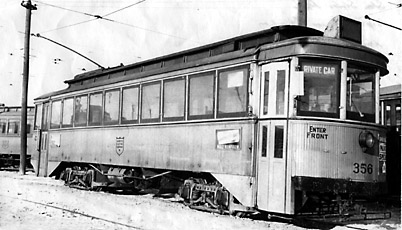 You may have heard about Streetcar 356, if not, a history of 356 from Heritage Winnipeg's website. With her 100th anniversary coming up in 2009 there is movement to get her restored by then !
On the promotion end, if you're on Facebook there is a "Restoration of Streetcar 356" group with a lot of great historic photos and some other memorabilia. For non-Facebookers there's a site coming soon on the www with the same information and pics.

On the fundraising front, buflyer has done a great job designing some t-shits for sale via cafepress. There is also going to be a batch of them made locally that will be available for sale sale at assorted heritage fairs and other special events, the first of which will be in September (details to come) proceeds go to the restoration project.
Heritage

A little more info:
Car 356 Pedigree
(from Winnipeg All Time Fleet Roster)
Built:1909
Manufacturer: Winnipeg Electric Rwy. Co.
Model Brill 27G1
Built in a batch of 4 (356-362 even numbers)
Seats: 44
Length: 45' Width 8'
Rebuilt to 'low floor' car in 1918 by changing motors & wheels
Retired from Service: 1955
(from Winnipeg All Time Fleet Roster)
Built:1909
Manufacturer: Winnipeg Electric Rwy. Co.
Model Brill 27G1
Built in a batch of 4 (356-362 even numbers)
Seats: 44
Length: 45' Width 8'
Rebuilt to 'low floor' car in 1918 by changing motors & wheels
Retired from Service: 1955
Pics of Wpg Electric Railway Co. streetcar 356 from Heritage Winnipeg Special Collection, Archives Heritage Winnipeg Collection
Though the goal now is just the restoration, some nearby cities have fun with their old streetcars like Edmonton and Minneapolis.
For t's follow the link ( I will update as to where the local ones will be on sale). To donate or volunteer you can contact: Heritage Winnipeg.
Len Fairchuk, The Western Hour and the Rex Theatre
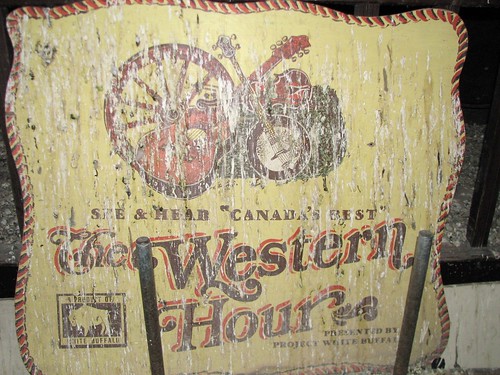
The Western Hour, The Rex’s last owner
I’ve been thinking a lot about Len Fairchuk recently. Yes, THAT Len Fairchuk - of The Western Hour fame !
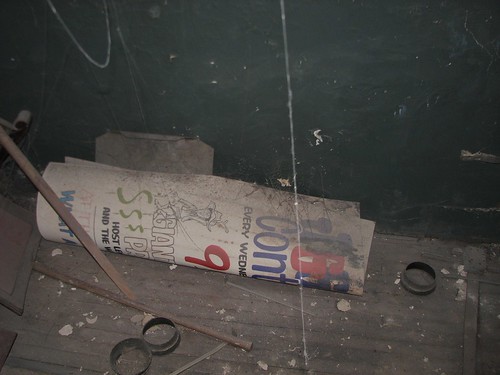
Recently I was invited into the Rex Theatre before its demolition to help salvage some chairs that will be used in the expanded West End Cultural Centre. While there, I found some remnants of Len's The Western Hour which was the theatre's last owner, (he rechristened the place The Opry Grand.)
I remember watching the Western Hour growing up. It was hard to miss in the 13 channel universe. It was a very low budget, oddly edited, no frills, talent show of sorts featuring pro and amateur singers, jiggers and fiddlers from around Manitoba.
I saw Fairchuk a couple of times away from the show walking about town with his art portfolio under his arm, but didn't really know anything about the man.As Len was the last person to give a damn about the Rex, I thought I would take a look back at his life.

Len Fairchuk (1932 - 2004)
Fairchuk was born in 1932 in St. Boniface and raised in Horad, Manitoba, north of Elphinestone. Len’s day job was a mechanic, but the arts would become his career. He was a fiddler, carver and painter, his
talent for the latter landed him a job as a sign painter, then a set
designer at a Los Angles movie studio.
Upon his return to Manitoba, Fairchuk wanted to continue in the entertainment industry. He used the format of a popular 1940’s to 60s Manitoba radio show called “The CJOB Western Hour” and revived it for a television audience focusing on Aboriginal and Metis artists.
The Western Hour began its impressive 12-year run on VPW (Winnipeg's Cable Access Channel) in 1979 based out of the Rex, which was then called he Epic Theatre.
Soon, the show went on the road and long before live satellite feeds and "palm of your hand" camcorders, Fairchuk and wife, Sandra, would rent a single television camera for the weekend and travel to towns and reserves throughout Manitoba to showcase Aboriginal talent, including jiggers, fiddlers and country music bands. He gave more ordinary people their 15 minutes of fame than any Manitoba television production ever has, or likely ever will.
Soon, the show went on the road and long before live satellite feeds and "palm of your hand" camcorders, Fairchuk and wife, Sandra, would rent a single television camera for the weekend and travel to towns and reserves throughout Manitoba to showcase Aboriginal talent, including jiggers, fiddlers and country music bands. He gave more ordinary people their 15 minutes of fame than any Manitoba television production ever has, or likely ever will.
After VPW, the show continued on CKND and MTN. It still lives on today, back in radio format, on NCI-FM.

Fairchuk's involvement with the Rex theatre seems to have had two distinct periods. From about 1979 to 1981 the Rex was home base for The Western Hour, but he did not own it.
In 1987, The Western Hour Ltd., a non-profit group, purchased the theatre, which by this time had become a XXX cinema, from the owner. It was rechristened the Opry Grand with the hopes of becoming a counry music hub for the city.
I recall media stories about Fairchuk fundraising by selling his art to keep the place going.
In 1991 the theatre closed for the final time.
Fairchuk died of a heart attack on April 4, 2004 at the age of 71. The following year he was among the inaugural inductees into the Aboriginal Music Hall of Fame for his support of aboriginal artists throughout the province.
Seeing the stage and the old posters I wonder what would have happened if more people had rallied behind Fairchuk and supported his dream to create an Aboriginal country music venue and preserve a magnificent theatre ?
Sadly we will never know.
Sorry, Len.
Related:
- Go here for an expanded and updated version of this post !!!
- For more photos of the Rex before demolition.
Obituaries:

April 7, 2004, Winnipeg Free Press

April 8, 2004, Winnipeg Free Press
Upper Fort Garry Notes
Originally written April 13, 2008
I did some newspaper and Henderson Directory research on the gate. Here's what I found:
Late 1880s: The walls and gates were torn down to allow for the straightening of that section ofMain street

“Gateway Park Gateway Park
1904: With a newly straightened and widenedMain Street Main . Aside from sheds, they would also build their rolling stock at this location (1904 – 1914) and generate electricity for the rail system.

- Winnipeg Electric Railway Car Sheds
- 140 Hudson Bay Chambers
- 144 Wm Becher, Accountant
- 148 Alexander Burgess, Secretary
1911:
- Winnipeg Electric Railway Car Sheds- Fort Garry (Gateway) Park
- 140 – 148 Vacant
- Winnipeg Electric Railway Car Sheds
- Athletic Grounds (included a soccer pitch and some track and field)
-Fort Garry Park
1920:
- Winnipeg Electric Railway Car Sheds
- Athletic Grounds
- Fort Garry Park
1925:
- Winnipeg Electric Railway Car Sheds
- Fort Garry Stadium
- Athletic Grounds- Fort Garry Park
- 142 Fort Garry Gate Service Centre- The stadium was a small open air stadium with soccer and rugby in summer and ice skating in winter.
England
There was sentiment, even back then, for the gate. An op-ed in the May 21, 1936 FreeP by Archbishop Matheson said: “in view of…the important part which the fort played in the early history of what is now Manitoba
Metro Council agrees to purchase the Imperial Oil Building 100 Main Street
Fort Garry Western Canada ’s greatest tourist attraction” (FreeP June 22 1963)
The gas station, (a Gulf since 1973) applied to demolish the old fashioned service station and replace it with a self serve. Once again this got wheels turning at city hall - an article in the September 10, 1975 FreeP said that the city was looking to purchase the service station lot “for completion of the Fort Garry Gate Park
I did some newspaper and Henderson Directory research on the gate. Here's what I found:
Late 1880s: The walls and gates were torn down to allow for the straightening of that section of
Image from

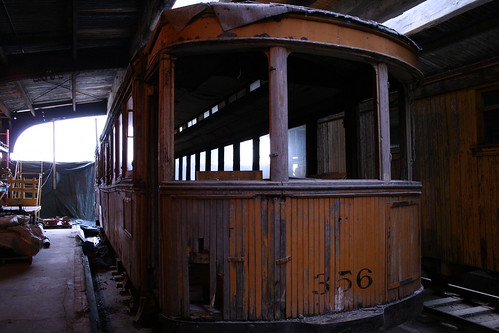
Image: Postcard of Gate with Manitoba
1904: With a newly straightened and widened
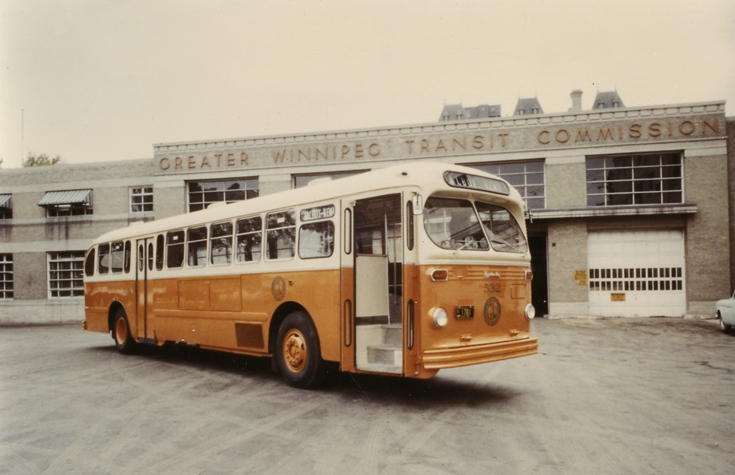
from Winnipeg Colour Streetcar Photos
The layout for the west side of
1905:
- Winnipeg Electric Railway Car Sheds
- 140 Hudson Bay Chambers
- 144 Wm Becher, Accountant
- 148 Alexander Burgess, Secretary
1911:
- Winnipeg Electric Railway Car Sheds- Fort Garry (Gateway) Park
- 140 – 148 Vacant
- Winnipeg Electric Railway Car Sheds
- Athletic Grounds (included a soccer pitch and some track and field)
-
1920:
- Winnipeg Electric Railway Car Sheds
- Athletic Grounds
- Fort Garry Park
1925:
- Winnipeg Electric Railway Car Sheds
- Fort Garry Stadium
- Athletic Grounds- Fort Garry Park
- 142 Fort Garry Gate Service Centre- The stadium was a small open air stadium with soccer and rugby in summer and ice skating in winter.
- The service station appears on the site (140 Main Street) was the Fort Garry Gate Service Station (Phone 23-777 !) in 1925. It was owned by Thomas E Montgomery of 5-559 Ellice and George Alvare of 703 Anderson.
1948: Grain Exchange Club/Rink is constructed at
1953: The Fort Garry Chamber of Commerce felt that the gate should be theirs, as it was not located in “
1972: The idea of expanding the park was touted as a good project for the 1974 Centennial Year Celebrations. On December 22 it was reported that an agreement was reached on a plan to expand the park site and rebuild a replica of one of the old fort buildings. It noted that “the expansion of the park, located behind the Manitoba Club, …was part of Metro’s original downtown development plan”.
2008: After decades of relative inaction, the city put a tender out for the 100 Main stie and adjacenet parking lot. In the end, a group called Friends of Upper Fort Garry intervened to stop any development deal to allow time to fundraise and purchase the land to create a larger park and interpretive centre.
Do We Dare Squander ...
When in Chicago I visited the Chicago Architecture Foundation. If you love cities and architecture that is a great place to spend time. They have a Cityspace Gallery with their Chicago: You Are Here display that “provides a tour of the spaces, places, and structures that define Chicago. It highlights the people who built the city, from the Sears Tower to the Illinois and Michigan Canal.”

The Foundation also currently has a display entitled Do We Dare Squander Chicago’s Great architectural Heritage . The title is taken from a sign that photographer and preservationist Richard Nickel first carried in a 1961 protest to save the Garrick Theater in Chicago.


Nickel became the focal point of the preservationist movement in Chicago in the 60’s and 70’s when many of the city’s old theatres and office towers were being torn down> Ironically, he was killed by a staircase that fell from the semi demolished Chicago Stock Exchange building while photographing and collecting artifacts.


The Foundation also currently has a display entitled Do We Dare Squander Chicago’s Great architectural Heritage . The title is taken from a sign that photographer and preservationist Richard Nickel first carried in a 1961 protest to save the Garrick Theater in Chicago.
Nickel became the focal point of the preservationist movement in Chicago in the 60’s and 70’s when many of the city’s old theatres and office towers were being torn down> Ironically, he was killed by a staircase that fell from the semi demolished Chicago Stock Exchange building while photographing and collecting artifacts.
The Do We Dare Squander display was not just visual. A series of public lectures, tours, videos etc. are part of it as well. Here’ an overview from the Chicago Tribune.
I felt inspired to be in a place that celebrated and embraced its built environment like that.
Sadly in Winnipeg, which has a large collection of Chicago school buildings left, we will still gladly tear one down when a parking lot is called for.
The Commercial Bank of Manitoba (1885 - 1893)

Image: Sir Hugh Allan. Source: Library and Archives Canada.
From wikipedia ‘Hugh Allen’
One of the earliest banks in Manitoba was the Commercial Bank of Manitoba, 1885 - 1893.
In 1872 Donald Smith, (Lord Strathcona) sponsored a bill to incorporate the Bank, along with some other financial institutions. The first president was Sir Hugh Allan, a shipbuilder, financier and banker. (Allan had another claim to fame - his company was awarded the first contract to build the CPR but the 1873 Pacific Scandal that brought down MacDonald saw his Allan's contract declared null and void).
The Commercial Bank of Manitoba along with three others: The Sovereign; Banque du Peuple de Montreal and The Ontario Bank, failed in an 1893 market crash.
Some blamed the crash on an over-regulated banking system at the time but it “…had been an example less of the inadequacy of the Canadian system of regulation than of the punishment which irregular banking brings in its train.” ( Source: The Quarterly Journal of Economics, Vol. 14, No. 4 (Aug., 1900), pp. 543-551).
In the end, the CBM was able to pay back its depositors.
Examples of Bank of Manitoba money:
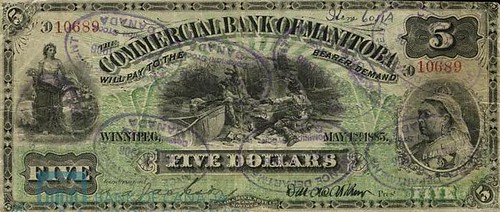


Bank note sources: here and here. To examine the $5 in great detail go here.
Public Transit Strikes in Winnipeg
Originally written June 8 2008
Word is that Winnipeg Transit may be ready to strike. Talks have been stalled (no pun intended) for some time now. Compared to some jurisdictions, Winnipeg has not had a lot in the way of transit strikes. There have been only three:


Word is that Winnipeg Transit may be ready to strike. Talks have been stalled (no pun intended) for some time now. Compared to some jurisdictions, Winnipeg has not had a lot in the way of transit strikes. There have been only three:
Metro Transit: 26 January 1976 to 12 March 1976
47 days
47 days
Winnipeg Electric Railway Company
May/June 1919
May/June 1919
Winnipeg Street Railway Company
March 1906
March 1906
Subscribe to:
Posts (Atom)